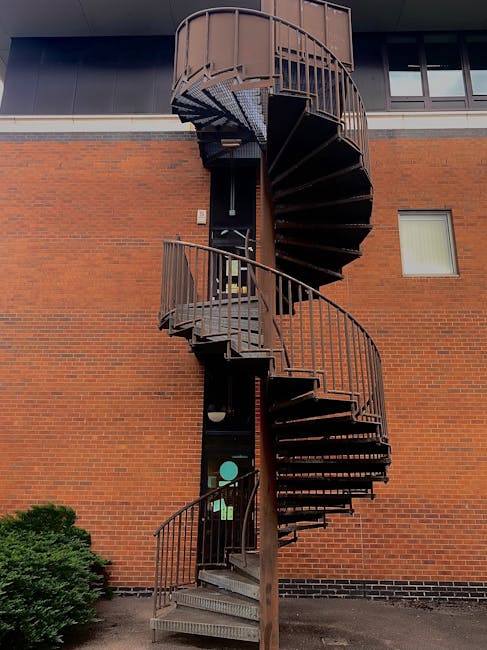
Staircase moving techniques for flats and maisonettes: a practical guide for safer, smoother moves
Moving out of a flat or maisonette is rarely as simple as "pack the van and go". Stairs change everything. Narrow landings, awkward bends, shared entrances, top-floor walks, and those slightly-too-heavy items that looked manageable until you reached the second flight. That is exactly why staircase moving techniques for flats and maisonettes matter so much.
In this guide, you'll find a clear, real-world approach to planning, lifting, protecting, and moving furniture through stairwells without turning the day into chaos. We'll look at what works, what tends to go wrong, and how to decide whether you need a full team, a man and van service, or a more tailored house removal service. If you're moving in London, or anywhere with tight access and shared stairs, this is the kind of know-how that saves time, stress, and a few bruised shins.
Truth be told, most staircase moves are won before the first box is lifted. Good measurements, sensible packing, and the right sequence make a bigger difference than brute strength ever will. Let's get into it.
Table of Contents
- Why Staircase moving techniques for flats and maisonettes Matters
- How Staircase moving techniques for flats and maisonettes Works
- Key Benefits and Practical Advantages
- Who This Is For and When It Makes Sense
- Step-by-Step Guidance
- Expert Tips for Better Results
- Common Mistakes to Avoid
- Tools, Resources and Recommendations
- Law, Compliance, Standards, or Best Practice
- Options, Methods, or Comparison Table
- Case Study or Real-World Example
- Practical Checklist
- Conclusion
- Frequently Asked Questions
Why Staircase moving techniques for flats and maisonettes Matters
Staircases are the bottleneck in most flat and maisonette moves. Even when the ground-floor loading is easy, the stairwell can introduce the real problems: corners that stop a sofa turning, low ceilings that catch wardrobes, and communal spaces that need care and respect. If you've ever watched a bed base hover at an impossible angle while two people stare at each other in silence, you'll know the feeling.
Good technique matters because stairs make every mistake more expensive. A sloppy lift can damage the item, scratch the wall, or leave you with an injury that slows the whole day down. In a maisonette, the route may also be more complex than it first appears. You might have internal stairs, but also communal steps at the entrance, narrow front doors, or a tight bend halfway up. That combination is exactly where proper planning pays off.
There's also the issue of shared living. Flats and maisonettes usually mean neighbours, common hallways, management rules, and limited parking. A move that is organised and quiet tends to go far more smoothly than one that leaves stairwells blocked and people irritated. If you need a broader removals overview, the main removals page is a sensible starting point, while the home moves service is helpful if you're shifting an entire household rather than just a few larger items.
Expert summary: staircase moves are not mainly about strength. They are about route control, item preparation, team coordination, and protecting both the property and the people moving through it.
How Staircase moving techniques for flats and maisonettes Works
The basic idea is straightforward: break the move into manageable stages so stair access never becomes a last-minute surprise. In practice, that means assessing the route first, reducing weight where possible, and moving in a controlled order. Nothing glamorous. But it works.
A well-run staircase move usually starts with a walk-through. You check the stair width, landing space, banisters, door swings, and awkward turning points. Then you decide which items must be dismantled, which can be wrapped as they are, and what should go down first. Bulky but light items, like mattresses, are often easier to move early because they create less fatigue. Dense items, like book boxes, need extra care because they are smaller but deceptively heavy.
Good movers also think vertically. It sounds obvious, but many people only think about distance. Stairs are not just distance; they are repeated lifts, shifts, and re-grips. That's why the best staircase moving techniques use a combination of body positioning, communication, and protective materials. When you're halfway down a flight and can smell fresh paint or hear a neighbour opening their door, you want your plan already working, not being invented on the spot.
For items that need more careful handling, it can make sense to use a service such as packing and unpacking services so boxes are consistent and easier to carry, or to arrange a dedicated moving van if the staircase access means you want a smaller, more flexible vehicle close to the entrance.
Key Benefits and Practical Advantages
The payoff is not just "faster moving". It's a safer, calmer, less wasteful day. And yes, that really matters when you're juggling keys, lifts, parking permits, and a phone that keeps ringing.
- Less damage to furniture: correct lifting and wrapping help prevent corner dings, scuffs, and crushed edges.
- Lower risk of injuries: moving heavy items on stairs without technique is where backs, wrists, and knees get punished.
- Better use of time: when the route is planned, each trip is more efficient and less stop-start.
- Fewer neighbour issues: organised timing and tidy stairwell use reduce disruption in shared buildings.
- Cleaner property handover: walls, bannisters, and flooring stay in better condition, which matters at checkout.
- Less mental overload: oddly enough, having a clear sequence makes the whole move feel more controllable.
One of the less obvious advantages is confidence. When people know the stairs have been measured, the sofa has been checked, and the route is mapped, they stop panicking halfway through. That changes the tone of the whole day. For many households, especially in London where stair access can be tight, that calm is worth a lot.
If you're comparing services, it helps to look at the practical fit rather than only the headline price. A flexible man with a van option may suit smaller flat moves, while a more structured team from a removal company might be better if you've got multiple flights, storage items, and awkward furniture.
Who This Is For and When It Makes Sense
This guidance is for anyone moving in or out of a flat, maisonette, or upper-floor property where stairs are part of the problem. That includes tenants, first-time buyers, landlords helping with turnovers, and families moving between compact homes. It also makes sense if you're moving a few bulky items rather than a full load. Staircase technique still matters when the piano bench is awkward, or the fridge freezer is just a little too wide for comfort.
You'll get the most value from this approach if:
- your property has narrow internal or communal stairs;
- the building has limited lift access or no lift at all;
- you're moving furniture with sharp corners or fragile finishes;
- you need to protect walls, floors, and shared areas;
- you want to keep the move efficient without overpaying for unnecessary labour.
It's also useful if you're dealing with a mixed move. For example, a maisonette may have everyday household goods going one way, but a few extra items being collected separately. In that case, a service like furniture pick-up can be handy for standalone pieces that don't justify a whole vehicle. And if you're looking for a local starting point, removals near me is a common search for people who want something quick and nearby, especially when access is tight.
Step-by-Step Guidance
Here's the practical version. Not theory. The real sequence that usually works best.
- Measure the route. Check stair width, landing depth, ceiling height, door frames, and any turns. Don't guess. A tape measure is boring, but brilliant.
- Identify problem items early. Sofas, wardrobes, dining tables, mattresses, large mirrors, and white goods often need special handling or dismantling.
- Clear the stairs completely. Remove shoes, mats, umbrellas, bikes, and anything else waiting to trip someone up. In a shared hall, this matters more than people think.
- Protect the building. Use floor runners, corner guards, and blanket wraps. If you're in a leasehold building, being careful here is just basic good manners.
- Dismantle where sensible. Take beds apart, remove table legs, and detach shelves or handles. A slightly smaller item can be the difference between a smooth turn and a hard stop.
- Pack boxes by weight, not by category. Books in one box, kitchenware in another, but don't make every box heroic. Heavy boxes on stairs are a mistake waiting to happen.
- Use a two-person carry where needed. One person leads, one follows. The key is communication: "up", "down", "pause", "turn". Simple words. No chatter.
- Move in the right order. Usually, awkward oversized pieces first, then boxes, then smaller items. But if a building has time restrictions, sequence can change. Be flexible.
- Recheck as you go. If a sofa catches on the banister, stop and reset. Pushing through is how damage happens.
- Finish with a final sweep. Check the stairwell, landing, and flat for screws, packing tape, and forgotten small items. There is always one forgotten charger, isn't there?
A small but important detail: pace yourself. Stair moves fail when people try to go too fast in the first twenty minutes. Slow and steady is not lazy here; it's efficient.
Expert Tips for Better Results
These are the details that make the job feel noticeably easier. Small things, but they stack up.
Wrap corners before you wrap the whole item. A sofa corner can catch on a wall edge in a blink. Extra padding around the ends helps more than people expect.
Keep the heaviest carrier at the lower end on stair descents. That gives the team better control. On ascents, the stronger lifter often works best below the load, but it depends on the object and stair angle. The point is to balance the item, not just the people.
Use consistent box sizes. Random box shapes make stacking and carrying harder. Uniform boxes also move more safely down steps.
Take the bannister into account. Many stair moves fail because the item can physically fit, but not with the hand placement that's available. That's a route problem, not a size problem.
Pre-plan parking and unloading. If the van is too far away, the staircase becomes only one part of a longer carry. In London that extra distance can wear people out quickly, especially on a damp afternoon when everyone's already a bit fed up.
Use the right vehicle size. Sometimes a smaller load vehicle is better than a huge truck if access is tight. A removal van or removals van can be more practical for a flat move with restricted access. The vehicle is part of the staircase strategy, not separate from it.
Be honest about what needs professional help. If your wardrobe is a two-person lift even on level ground, don't pretend it will become manageable on stairs. It won't. A proper house removers team can save both time and stress.
A slightly old-school tip, but still useful: if the first attempt at a turn feels wrong, stop and rethink. People sometimes keep pushing because they feel committed. That's how walls get scraped. Better to pause for ten seconds than spend ten days annoyed about it.
Common Mistakes to Avoid
Most staircase moving problems are preventable. Most. Not all, but most.
- Not measuring the route. "It should fit" is not a plan.
- Overloading boxes. Heavy boxes on stairs are awkward, tiring, and unsafe.
- Ignoring turning space. A straight stairwell is one thing; a tight landing turn is another entirely.
- Skipping protection. A bare wall and a sharp corner are a bad combination.
- Rushing the team. Speed without coordination just creates mistakes.
- Using the wrong service type. Not every move needs the same setup. Matching the job properly matters.
- Forgetting the building rules. Some blocks want advance notice, lift booking, or certain moving hours.
One common error is treating a staircase move like a normal van load. It isn't. Even a small move can become complicated if the furniture has to pivot through narrow stairs. That's why many people choose a specialised house movers service rather than trying to improvise on the day.
Another mistake is failing to sort out unwanted items early. If you're clearing a flat and only some of the furniture is coming with you, use a service that can help with surplus items, or arrange a collection like furniture pick-up before moving day gets crowded.
Tools, Resources and Recommendations
You do not need a warehouse of specialist kit, but a few well-chosen tools make staircase moves much easier.
| Tool / Resource | What it helps with | Why it matters on stairs |
|---|---|---|
| Furniture blankets | Protecting furniture and walls | Softens bumps on tight turns |
| Ratchet straps | Securing items safely | Keeps loads stable during lifts |
| Furniture sliders / trolleys | Ground-floor movement | Useful before and after the stair section |
| Corner protectors | Wall and banister protection | Especially useful on narrow landings |
| Strong packing tape and labels | Organisation | Stops boxes getting mixed up during repeated trips |
From a service point of view, the best recommendation is to choose the level of help that fits your property rather than chasing the fanciest package. A local movers team can be useful for labour-heavy staircase sections, while house removals may suit a fuller home move with more packing, loading, and transport included.
If you want to compare quotes properly, look at what's included: carrying, dismantling, wrapping, waiting time, access difficulty, and any extra charges for upper floors. The cheapest quote is not always the best value. Sometimes it is, but often not.
Law, Compliance, Standards, or Best Practice
For most flat and maisonette moves, the key legal and practical concern is safety and reasonable care. You are usually dealing with shared property, potential access restrictions, and the need to avoid damage or obstruction. If you live in a leasehold block or managed building, the building's own move-in/move-out rules can matter just as much as the moving day plan.
In UK practice, a reputable removals provider will normally work with sensible health and safety procedures, suitable insurance arrangements, and careful handling methods. If you are hiring help, it is reasonable to ask about insurance and safety, especially where stairs are involved. You should also check how the company handles customer information and payments if you are booking online; the site's payment and security page and privacy policy are useful starting points for that.
Best practice is also about communication. If a building requires lift booking, advance notice, or specific access times, follow those rules. It keeps the move smooth and reduces the chance of complaints. If you're unsure whether a provider is a good fit, read the company background on the about us page and check the complaints procedure so you know how issues are handled if something unexpected comes up.
For people in London, it can also help to choose a team familiar with the area and the realities of terraced conversions, mansion blocks, and period staircases. That local awareness is often the difference between a move that feels effortless and one that feels like a puzzle nobody asked for.
Options, Methods, or Comparison Table
Not every staircase move needs the same level of support. Here is a simple comparison to help you decide.
| Option | Best for | Strengths | Limitations |
|---|---|---|---|
| DIY with friends | Very small moves, light furniture | Low upfront cost, flexible timing | Higher risk, less experience, more strain |
| Man and van | Studio flats, one-bedroom moves, partial loads | Good value, adaptable, often quicker to book | May not suit heavy or complex stair access alone |
| Full removal team | Full household moves, difficult access, bulky items | More hands, better coordination, more protection | Usually costs more |
| Specialist packing and removals support | Fragile items, time-sensitive moves, busy households | Less stress, better packing consistency | Can feel like more service than a simple move needs |
If the route is especially tight, a straightforward man with van removal setup may be enough for one move, but not all. If the staircase is steep, shared, and awkward, a fuller removal services package is often the calmer choice. The best option is usually the one that matches the building, not the fantasy version of the building in your head.
Case Study or Real-World Example
Here's a realistic example. A couple moving out of a third-floor maisonette in south London had a king-size bed frame, a corner sofa, six heavy book boxes, and a large mirror. The stairs had a tight turn halfway up, and the front entrance opened directly onto a shared hallway. No lift. No generous landing. Classic challenge, really.
They started by measuring the stair width, then dismantled the bed and removed the sofa feet. The mirror was wrapped separately, padded at the corners, and labelled as fragile. They also moved the book boxes into smaller loads so nobody had to carry a box that felt like a brick. The team used blankets along the wall edge and paused once at the turn to adjust the angle rather than forcing it through.
The move still took effort, of course. It's stairs. But because the plan was clear, there was no panic, no damage, and no awkward moment where everyone stood on the landing wondering who was going first. The difference between that and a messy move was not luck. It was preparation.
For another scenario, imagine a single occupant in a compact flat needing to move a bed, a desk, and a few kitchen pieces. A smaller vehicle and hands-on help from a man and van removals service can be exactly the right balance. Not too much. Not too little. Just enough support to make the stairs manageable.
Practical Checklist
Use this before moving day. It keeps things simple.
- Measure stair width, landings, and door frames.
- Check whether large items need dismantling.
- Confirm parking, loading, and access times.
- Protect floors, walls, and banisters.
- Pack heavy items into smaller boxes.
- Label fragile and awkward boxes clearly.
- Clear the hallway and stairwell completely.
- Notify building management or neighbours if needed.
- Confirm insurance and safety arrangements.
- Keep tools, tape, and a basic kit close by.
- Plan the loading sequence before the first lift.
- Have water and a quick break plan. Honestly, you'll want it.
Key takeaway: the best staircase move is the one you've already mentally walked through once before it starts.
Get a free quote today and see how much you can save.
Conclusion
Staircase moving techniques for flats and maisonettes are really about control: control of the route, the load, the pace, and the environment around you. Once those pieces are in place, the move becomes much less intimidating. You do not need superhuman strength. You need good preparation, the right equipment, and a sensible approach to the building you are working in.
Whether you are moving a few key items or an entire household, the stairwell deserves proper attention. That's the bit people forget until they are standing on the landing with a sofa that will not bend. If you take one thing from this guide, let it be this: measure first, protect early, and move steadily.
If you're still weighing up your options, it may help to compare service types, check access needs, and speak to a team that understands flat and maisonette moves properly. A careful conversation at the start can save a lot of grinding effort later on. And that, to be fair, is a very good trade.
Whatever your move looks like, keep it calm, keep it safe, and don't be afraid to ask for help when the stairs say no.
Frequently Asked Questions
What are the best staircase moving techniques for flats and maisonettes?
The best techniques are route planning, proper item measurement, protective wrapping, balanced two-person lifting, and moving items in a sensible order. The aim is to reduce strain and avoid damage, not to rush through the stairs.
How do you move a sofa down narrow stairs in a flat?
Measure the staircase and landing first, remove feet or detachable parts, wrap corners, and use two people to control the angle. Sometimes the sofa needs to be rotated vertically to clear the bend. If it still won't fit, stop and reassess rather than forcing it.
Do I need a removal company for a maisonette move?
Not always, but it helps if you have heavy furniture, multiple flights, or tight communal access. A smaller move might suit a man with a van service, while larger or more awkward moves usually benefit from a full team.
What is the safest way to carry boxes on stairs?
Use smaller, evenly packed boxes and avoid overloading them. Keep your grip secure, maintain clear communication, and don't twist your body while stepping. Heavy boxes should never be packed so full that they become unstable.
How do I protect walls and bannisters during a staircase move?
Use furniture blankets, corner protectors, and floor coverings where needed. Keep items lifted and controlled rather than dragged. In shared buildings, this is one of the most important parts of the move.
Can a moving van help with flat or maisonette access issues?
Yes. A moving van or removal van can be the right choice if access is tight and you need something more flexible than a large truck. The vehicle size should match the route and the load.
What items usually need dismantling before going down stairs?
Bed frames, large tables, wardrobes, shelving, and some sofas often need to be taken apart. Anything with long rigid edges or awkward corners is worth checking in advance. A few screws removed early can save a lot of trouble later.
How far in advance should I plan a staircase move?
Ideally, plan at least a few days ahead for a small move and longer for a full household shift. That gives you time to measure, dismantle, check parking, and sort building access requirements. Last-minute staircase moves are where things get messy.
Are staircase moving techniques different for flats than for maisonettes?
Yes, slightly. Flats often involve communal stairwells and shared access, while maisonettes may combine internal stairs with entrance steps or tighter in-home turning points. Both need route planning, but the access challenges are often different.
What should I ask a removals provider before booking?
Ask about insurance, access experience, stair handling, dismantling, packing support, and whether they have handled similar properties before. It also helps to check how they handle payments and what happens if plans change. The pricing and quotes page is useful when you want to compare options clearly.
What if my furniture does not fit around the stair corner?
First, stop. Then see if the item can be dismantled or rotated differently. If not, it may need to go through an alternative route or be moved by a more experienced team. Forcing it usually causes scratches, frustration, or both.
Is it worth getting packing help for a flat move?
Yes, especially if you have fragile items, awkward box sizes, or a lot to do in one day. Professional packing and unpacking services can make staircase moves easier because the boxes are more consistent and easier to carry safely.
If you'd like to speak to a removals team or ask about a staircase-heavy flat move, you can also visit the contact us page for the next step.