Office Removals in London

Office removals in London need careful planning, tidy coordination and a practical approach to moving business equipment without unnecessary disruption. We provide a structured removal service for workplaces that need desks, chairs, storage, IT kit and everyday office contents moved with care. The service is built around sensible sequencing, clear handling and a straightforward route to a quotation for companies that want to plan a move properly.
Because an office contains a mix of bulky furniture, sensitive paperwork and specialist equipment, the work is rarely just about transport. It often includes dismantling items where needed, protecting surfaces, arranging access and making sure everything is ready to be set down in the right order at the new premises. If you are comparing options, our office removals service gives a clear starting point for understanding what the move can cover.
For organisations moving between floors, across business districts or into a smaller or larger workspace, the aim is to keep the process orderly from the first collection to the final placement. We handle commercial moves with a practical focus, including the movement of furniture, filing, boxes and workstations. If you already know the broad scale of the job, you can request pricing and quotes once you are ready to outline the move.
Commercial moving work that keeps the job organised
Office moving is most effective when each stage is considered in advance. That means looking at what must be moved first, what should be wrapped or packed separately and which items need special attention because they are fragile, confidential or awkward to carry. We can support commercial moves that involve compact offices, growing teams and multi-room workspaces, with the emphasis always on methodical handling rather than rushed lifting.
Different workplaces need different combinations of support, so the service can be shaped around the furniture and contents involved. Chairs, reception pieces, desks and storage units all need sensible planning, while IT equipment may need extra care in packing and load sequencing. Our commercial moves page is useful if you want to see how office work sits within the wider business relocation service.
Helpful moving preparations usually come down to a few practical decisions rather than a long checklist. Identify the items that must be moved together, separate anything that should travel securely, and make sure access at both ends is clear enough for safe loading. A short written note about floors, lifts, restricted entrances or parking can also save time. If you prefer to keep things simple, we can work from the information you provide and help shape a sensible plan for the day.
Furniture, workstations and the heavier pieces

Many office removals revolve around large items that are awkward to move without disassembly or protective wrapping. Desks, boardroom tables, shelving, cabinets and fixed-style workstations often need more than just carrying from one room to another. We focus on reducing the risk of damage to the furniture itself and to the building surfaces it passes through, especially where stairways, lifts or tight corridors are involved.
In workplaces where furniture has been accumulated over several years, the move can also be a good moment to decide what should travel, what should be stored and what is no longer required. This does not mean every office must be stripped back, but it does help to know which items are central to the new layout and which are simply taking space. If you want a broader view of the available service range, the main removal services page sets out the core moving support in one place.
Good handling matters most where items are bulky or oddly shaped. Even a straightforward desk can become awkward if legs, cable trays or drawers need separating first. Likewise, cabinets and meeting tables may require planning for corners, doorframes and loading angles. When the details are clear, the move can be paced sensibly and the furniture can arrive ready for the next stage of set-up rather than arriving as an additional problem to solve.
Packing, labelling and the practical side of office contents
Office removals are easier when smaller contents are packed with a little structure. Files, stationery, supplies and personal items are best grouped in a way that makes unpacking logical at the destination. This is especially useful where multiple departments or teams are moving at the same time, because it helps avoid boxes being opened in the wrong area or mixed between work zones. Careful packing also supports better protection for laptops, peripherals and display equipment.
Where required, packing and unpacking support can be incorporated into the move rather than treated as a separate concern. That can make sense for busy firms that do not have the time to coordinate every box themselves, or for offices that need a more orderly handover between old and new premises. Our packing and unpacking services page provides more detail for customers who want that work included.
One of the most useful things you can do is keep the move readable. Label boxes by room, function or team, and note anything that needs to be placed near a wall, outlet or shared area. If there are items you would rather keep separate from the rest of the load, say so clearly from the outset. That allows the removal plan to stay practical without adding unnecessary complexity on the day.
Vehicles, access and moving logistics across the city

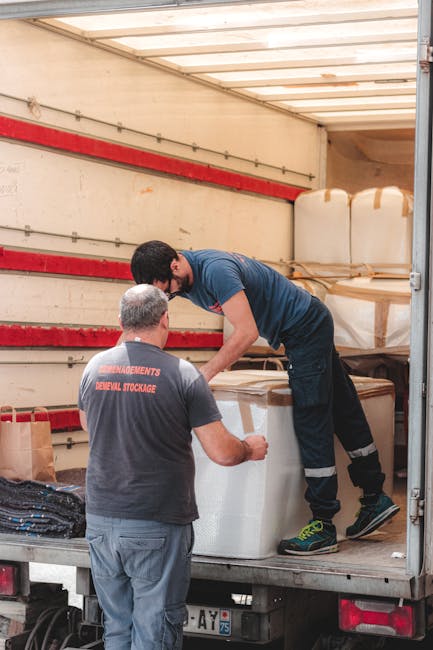
Office removals in a city setting can involve access issues that are just as important as the lifting itself. Loading bays, narrow entrances, lifts and timed building access can all affect how the move is arranged. We take a sensible approach to vehicle choice and loading order so that the removal can suit the location, the items and the practical limits of the premises. That includes using the right type of moving vehicle for the size of the job.
Where a move is compact and the contents are relatively limited, a smaller moving solution may be enough. Larger office projects, by contrast, may need a vehicle with more capacity and a plan that separates the load by priority. If you want to compare transport options, the related moving van page and the broader moving truck page are both relevant to the way commercial loads can be handled.
A move can also benefit from simple access preparation. Make sure keys, fobs and entry arrangements are ready, and let the team know about any restrictions that apply to the building. If there is a narrow time window for unloading, that should be mentioned early so the work can be planned accordingly. These are not dramatic details, but they often decide whether the day feels smooth or rushed.
Office relocation support for different workplace sizes
Not every office removal is the same. A compact studio, a professional practice, a shared workspace and a multi-room company office all need slightly different handling. Some moves are mostly about furniture and storage. Others involve a mixture of desk systems, reception furniture, archived paperwork and items that have to be placed with a bit of precision in the new premises. The service is therefore shaped around the type of business rather than a one-size-fits-all sequence.
For customers who need the relocation framed as part of a larger business move, our office relocation services page is the nearest match. It is a useful destination when the work goes beyond simply collecting and delivering furniture and includes the wider coordination of an office changeover. That distinction matters because some projects are focused on a few rooms, while others involve a full relocation between sites.
The most reliable approach is to think in terms of what must be available first at the destination. Reception furniture, workstations and shared equipment may matter more than decorative pieces or surplus storage. When priorities are clear, the removal can be arranged around the sequence that supports the business best. In other words, the move is not just about distance; it is also about what needs to function immediately on arrival.
About London
London is a vast capital city shaped by layers of Roman, medieval, Georgian, Victorian and modern development, with each era leaving a visible mark on its streets and institutions. The River Thames remains the city’s defining natural feature, curving through the centre and linking districts that vary sharply in character from west to east. Historic landmarks such as the Tower of London, Westminster Abbey and St Paul’s Cathedral sit alongside contemporary buildings, transport hubs and cultural venues, giving the city an unusually mixed architectural profile. Its neighbourhoods range from tightly planned terraces and mansion blocks to warehouse conversions, civic squares and large post-war estates, while green spaces such as Hyde Park, Regent’s Park, Hampstead Heath and the Royal Parks provide open ground within a densely built urban fabric. London also has a strong tradition of markets, theatres, museums and galleries, with collections and performances that draw audiences from across the United Kingdom and beyond. The city’s transport network, including the Underground, Overground, rail termini, buses and river services, connects a huge number of residential and commercial districts and helps shape how people move around it. As a result, London is often understood less as a single place than as a cluster of distinct areas with their own identities, histories and built forms.
Handling specialist items and office equipment

Some office removals involve items that need more consideration than standard furniture. Printers, monitors, servers, archive boxes, display units and fragile accessories all benefit from a careful sequence rather than being treated as ordinary loose goods. Where equipment is sensitive or valuable, the job is as much about reducing handling stress as it is about reaching the destination. Good planning can help keep items together and minimise unnecessary movement.
It is also worth separating any equipment that needs owner attention before or after transit, such as devices that should be powered down, disconnected or checked before reuse. We do not assume every workplace has the same technical set-up, so the practical method depends on what is actually on site. If you need removal support beyond office furniture alone, the related removal company page can help place the service within a fuller moving context.
Clear responsibilities make technical moves simpler. If one person can confirm which items are to travel, another can make sure no essential kit is left behind. That does not have to be complicated. A brief inventory, even if informal, can be enough to reduce confusion when the move day arrives. The goal is not paperwork for its own sake, but a cleaner handover between the old office and the new one.
Planning the quotation and outlining the work
When you request a quotation for office removals, the most useful information is usually the easiest to describe: what is moving, how much there is, where it is going and whether there are access factors that could affect the work. You do not need to turn that into a long report. A concise summary of rooms, floors, furniture types and any awkward items is often enough to begin a sensible estimate. That keeps the process practical from the start.
For many customers, the first conversation is also the point at which timing is clarified. Some moves need to happen in stages, while others can be completed in one planned visit. If you are still shaping the job, our contact us page gives a straightforward way to open that discussion and request a quotation. It is best to include access notes, preferred timings and any special handling requirements in your enquiry so the reply can be as accurate as possible.
Two brief points are often enough to speed things up: what must be moved and what conditions affect the building. If you know those, the quotation stage becomes much easier to handle. Even a move that seems small can involve tight access or mixed contents, while a larger office may be surprisingly straightforward if the layout is clear. The key is to give enough detail for an informed response without overcomplicating the request.
Useful related services for a business move

Some office customers want to keep the moving plan under one provider rather than splitting tasks between different teams. In that case, it can help to look at related services that sit alongside the main office move. For example, our man and van page may suit smaller, lighter or more flexible loads, while the house removals page is available for customers whose move includes a domestic element as well as business items. The right choice depends on the kind of load being moved, not on a single generic label.
Where customers want to compare options before making a decision, the broader removal companies page can be useful as a point of reference, while the house removal services page shows how similar logistical planning applies in a different setting. Office work is distinctive because it usually has a stronger focus on furniture, equipment and business continuity, but the underlying principles of care, route planning and sensible packing remain familiar. Choosing the right service page can help clarify which route is most appropriate.
If you are ready to move on, tell us what the office includes, where it is going and what needs extra care. That is usually enough to start the quotation process properly, and it keeps the next step simple.